Honoring Irish America’s Role in Building the United States
In 2026, the United States marks 250 years of independence.
From the very beginning, Irish Americans were there—soldiers in Washington’s army, leaders in politics, builders of cities, and servants of community. The Ancient Order of Hibernians carries that legacy forward in faith, culture, and charity.
Our Story
For generations, Irish immigrants and their descendants helped shape America. They dug canals and built railroads, raised churches and schools, and filled the ranks of the military, police, and fire services. They served in city halls and in Congress, never forgetting their heritage while building a stronger nation.
Today, the AOH continues that tradition—preserving Irish heritage, serving our communities, and forming men in Friendship, Unity, and Christian Charity.
Celebrate America 250 With the AOH
As the nation remembers 250 years of independence, the AOH invites you to celebrate the Irish American contribution. Together, we honor the past, celebrate the present, and build the future.
Honoring Commodore John Barry aboard the USS New Jersey
As America commemorates 250 years of naval service, the Ancient Order of Hibernians and the Ladies AOH proudly honor Commodore John Barry—Irish immigrant, American patriot, and the first commissioned officer of the United States Navy.
About the Exhibit
We have launched a dedicated exhibit aboard the Battleship New Jersey Museum and Memorial that brings Barry’s story to life—his courage in the struggle for independence, his leadership at sea, and his enduring example of faith, duty, and service. The display is slated to run through the end of 2025, with the possibility of extension.
To broaden the impact, the exhibit can also be duplicated in whole or in part by AOH & LAOH Divisions nationwide as a centerpiece of their local America 250 commemorations.
Why Your Support Matters
- Educate — Reach the Navy community and the general public visiting an iconic American battleship.
- Preserve — Sustain the production, upkeep, and interpretive materials of the display.
- Multiply — Enable replicable exhibit assets that Divisions can use locally in 2026.
Make a Donation
For Contributions not seeking a tax deduction please donate here directly to the Commodore John Barry Division AOHDC on this site.
For Contributions over $250 that require a tax deduction please donate here to the Barry Division Charitable Trust.
No contribution is too small—thank you for your generosity.
See the Celebration
Watch highlights from the opening aboard the USS New Jersey:
Watch the Exhibit Opening Video
Together, we honor an Irish-born American hero whose leadership helped secure independence and shape the early United States Navy.
AOH America 250 History Webinar Series
First Program Tuesday, September 23, 2025 · 7:00 PM ET
 Register to join the Webinar on Zoom
Or Watch Live on YouTube
Commodore John Barry: Irish Immigrant and Father of the American Navy
Guest Speaker: Tim McGrath, author of John Barry: An American Hero in the Age of Sail
The life of Commodore John Barry, in the words of Tim McGrath, “reads like a Patrick O’Brien novel.” Born to a Catholic family in County Wexford in 1745, young Barry took to the sea at an early age and arrived in Philadelphia in 1760. A nautical prodigy, he commanded his first vessel at the age of 21 and quickly established himself as a leading merchant ship captain.
When hostilities erupted between the American Colonies and Great Britain, Barry stepped forward to become one of the heroes of the American Revolution and the Father of the American Navy. Join us as we explore the role of this legendary Irishman and adopted son of Philadelphia in the founding of the American Republic.
About the Speaker
Tim McGrath is a two-time winner of the Commodore John Barry Book Award for American Maritime Literature and author of the critically acclaimed biography John Barry: An American Hero in the Age of Sail.
The late Professor Marshall McLuhan presciently noted, long before the advent of the World Wide Web, that we “live today in an age of information and communication [in which] electric media instantly and constantly create a total field of interacting events in which all men participate.” The contents of entire libraries now reside online, making history accessible from any place, at any time, without the need for even local travel. Even so, there has been a renewed interest in recent years, across many disciplines, in the concept of place. Place, as noted by J. Nicholas Entriken, “presents itself to us as a condition of the human experience” such that “our relations to place … become elements in the construction of our individual and collective identities.”
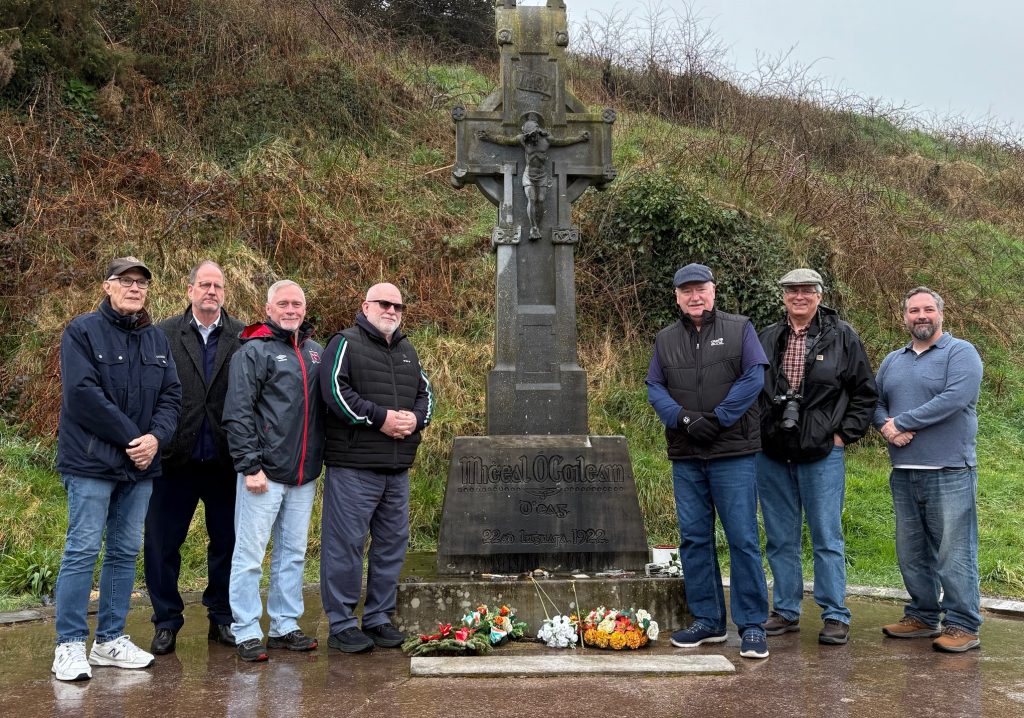
The first stop for travelers on the recent Hibernian History Tour of Ireland, fresh from the Dublin airport, the grave of Theobald Wolfe Tone in the ancient burial ground at Bodenstown, County Kildare, illustrates the significance of place in Irish history. Standing before the ruined church, dating to 1352, that forms the backdrop of Tone’s final resting place, the group contemplated Tone’s legacy as the father of Irish Republicanism and the significance of Bodenstown as a place of annual pilgrimage for generations of Irish patriots. Later that same day, our group stood atop Vinegar Hill in County Wexford and looked out from the base of the historic windmill, which stands, as it did in 1798, a silent, enduring witness to the sacrifices of the common people of Wexford who died, in the poignant words of Seamus Heaney, “shaking scythes at cannon.” The port town of Cobh in County Cork, from which so many of our ancestors embarked on their one-way journey from the land of their birth, proved as significant a place as any on the tour, as we reflected on the horrors of An Gorta Mór and the triumph of those who survived to make a new life in America. The group spent a relaxing two days in beautiful Kinsale, the site of the infamous siege and battle of 1601-1602 in which the Irish forces of O’Neill and O’Donnell could not break through to relieve their Spanish allies, with disastrous results for the old Gaelic Order. Traveling west through County Cork, a roadside stop at the Michael Collins ambush site near Béal na Bláth allowed the group to contemplate the relationship and intertwined legacies of Collins and his erstwhile comrade, Éamon de Valera, at the place where Collins received his mortal wound. The famous Ring of Kerry provided beautiful scenery en route to Derrynane House, the home of Daniel O’Connell, where our travelers took in the beauty of the place while contemplating O’Connell’s great triumph of 1829, Catholic Emancipation, his failed effort to repeal the Act of Union, and his place in the pantheon of Irish heroes. The group stopped at the majestic Rock of Cashel, seat of the Kings of Munster for 500 years, before traveling deep into the past in the Boyne Valley, where the ingenious Stone Age builders of the Newgrange complex showed a strong understanding of the significance of place. Later that day, before travelling on to Dublin, members of the group stood on the Hill of Tara, like the legendary High Kings of Ireland before them, and placed their hands on the Lia Fáil, or Stone of Destiny. The penultimate stop on the tour was the GPO, where our travelers took in the battle scars still extant on the magnificent Greek Revival portico and reflected on the events of Easter Week, 1916, and the tumultuous years that followed. The tour concluded, appropriately, at Glasnevin Cemetery, where we descended into the tomb of O’Connell and stopped to reflect at the final resting places of Parnell, de Valera and Collins, among many others. History is truly at our fingertips in this remarkable age of technology, but there is something special about being in the places that have shaped and informed the Irish identity.
]]>The mortal remains of Theobald Wolfe Tone were discreetly committed to the earth in the family plot at Bodenstown, County Kildare, on Wednesday, June 21, 1798. As few as two and no more than a dozen or so individuals were present at the burial, reflecting the order of Lord Castlereagh, Chief Secretary for Ireland, who had released the body on the “express condition that no assemblage of people shall be permitted and that it (the body) be interred in the most private manner.” Castlereagh went to his own grave two decades later, presumably thinking he had succeeded in depriving the enemies of the Crown of the propaganda effect of a martyr’s funeral for Tone.
In an immediate sense, the British had nothing to worry from Tone’s resting place, as it, and to some extent he, remained in relative obscurity for decades following his death, until two things changed the visibility of Wolfe Tone and his final resting place at Bodenstown.
The first was the publication, in 1826, of the two-volume Life of Theobald Wolfe Tone, a collection of Wolfe Tone’s writing, both private and political, curated by his widow, Matilda, and edited by his son, William. In the aftermath of the failed Rebellion of 1798 and the follow-on effort of Robert Emmet in 1803, Irish Nationalism had been dominated by the charismatic Daniel O’Connell and his successful campaign to pass the Roman Catholic Relief (Emancipation) Act of 1829. The Life of Tone provided proponents of physical force Republicanism with a fresh look at the unquestioned brilliance and authenticity of Tone, the man, and a new appreciation for his profound distillations of Enlightenment principles, as applied to British rule in Ireland.
The second factor that transformed the significance of Bodenstown was another, much shorter but equally powerful literary publication, a poem, published by the Nationalist poet, Thomas Davis, following a visit to Bodenstown in 1843 by Davis and John Gray, proprietor of the Freeman’s Journal. In Tone’s Grave, Davis recounts his visit to the as-yet-unmarked grave of Tone and describes falling asleep on the gravesite, only to be awakened by an assemblage of people, young and old, intent on raising a proper monument to “the cause and the man so long vanquished and slain.”
Davis’s poem found a ready audience in the Young Irelanders movement, members of which were chafing at the now-aged O’Connell’s constitutional methods and aversion to physical force. Shortly after the poem was published, Mathilda Tone wrote to Gray, from her home in Washington, D.C., asking him to assist in her “last sad duty” of raising a stone to mark the site where she thought she might soon make her “long last home” with Tone.
Bodenstown would never be the same. The first marker, commissioned by Davis and the Young Irelanders, was a simple slab. Tone’s legacy subsequently found resonance with the Fenian movement, and Bodenstown began to be a place to be visited. A larger replacement stone was laid in 1873, and a protective iron railing soon followed.
By the centennial of his death in 1898, Tone had come to be widely considered the Father of Irish Republicanism, and annual visits to Bodenstown by the Republican faithful, accompanied with fiery graveside orations, could aptly be called pilgrimages. In June 1913, Patrick Pearse stood at Bodenstown and declared it the “holiest place in Ireland” and Tone “the greatest of Ireland’s dead.” Pilgrimages to Bodenstown and orations at the graveside of Tone continue to this day and in March, travelers on the Hibernian History trip will make their way to Bodenstown to reflect upon the significance of the man and of the place. Lord Castlereagh would surely be horrified.
]]>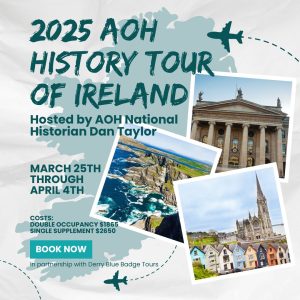
The Ancient Order of Hibernians will be hosting a 2025 AOH History Tour of Ireland led by AOH National Historian Dan Taylor. With space limited to one bus and 40 travelers President Sean Pender wanted to extend this offer to the general membership. If interested, please complete and return the application, contact President Pender with any questions. Spaces will be held only with paid deposit. Open to AOH members and their guests. This will no doubt be a very memorable trip. We will be recording presentations by our AOH historian at each historical site. Those recordings will be shared on our social media, and you tube sites. We are exploring the idea of having a history webinar related to Daniel O’Connell in Kerry, more to come on that.
]]>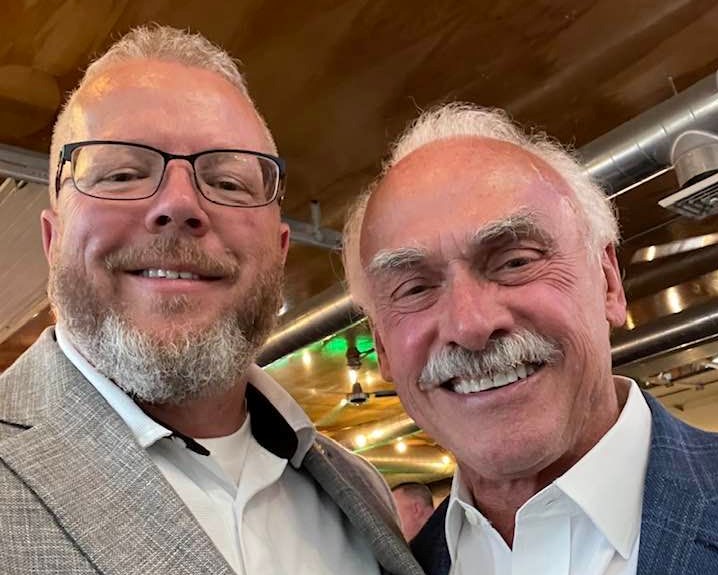
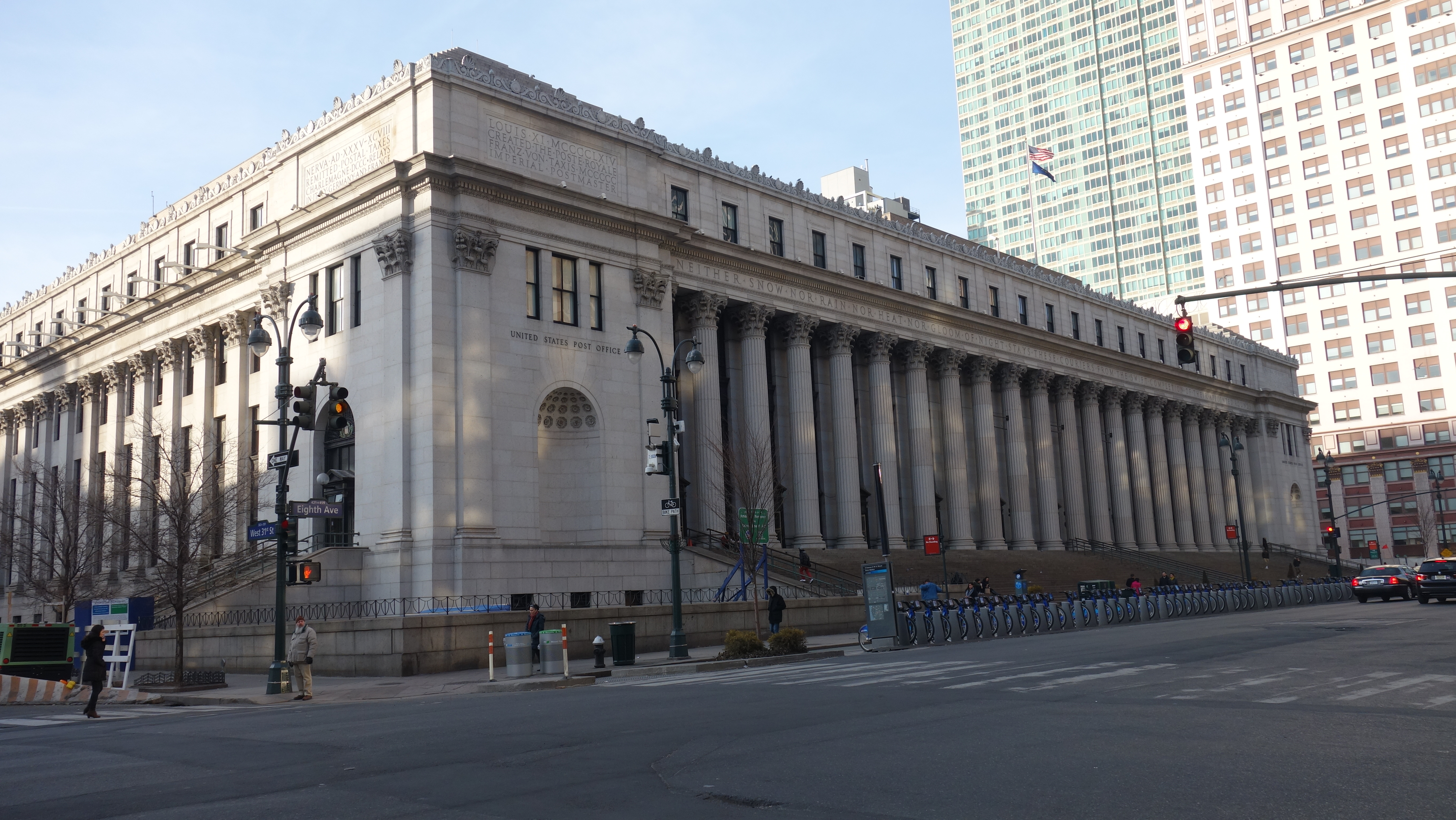
The first award of the medal was made in 1966 to the Hon. James Farley, former Postmaster General under Franklin D. Roosevelt. Farley, the grandson of Irish immigrants, managed FDR’s presidential campaigns in 1932 and 1936 and was an influential member of the New Deal “Brain Trust”. The University of Notre Dame awarded Farley its highest award, the Laetare Medal, in 1974. A member of AOH Division 29, New York, James Farley died in 1976.
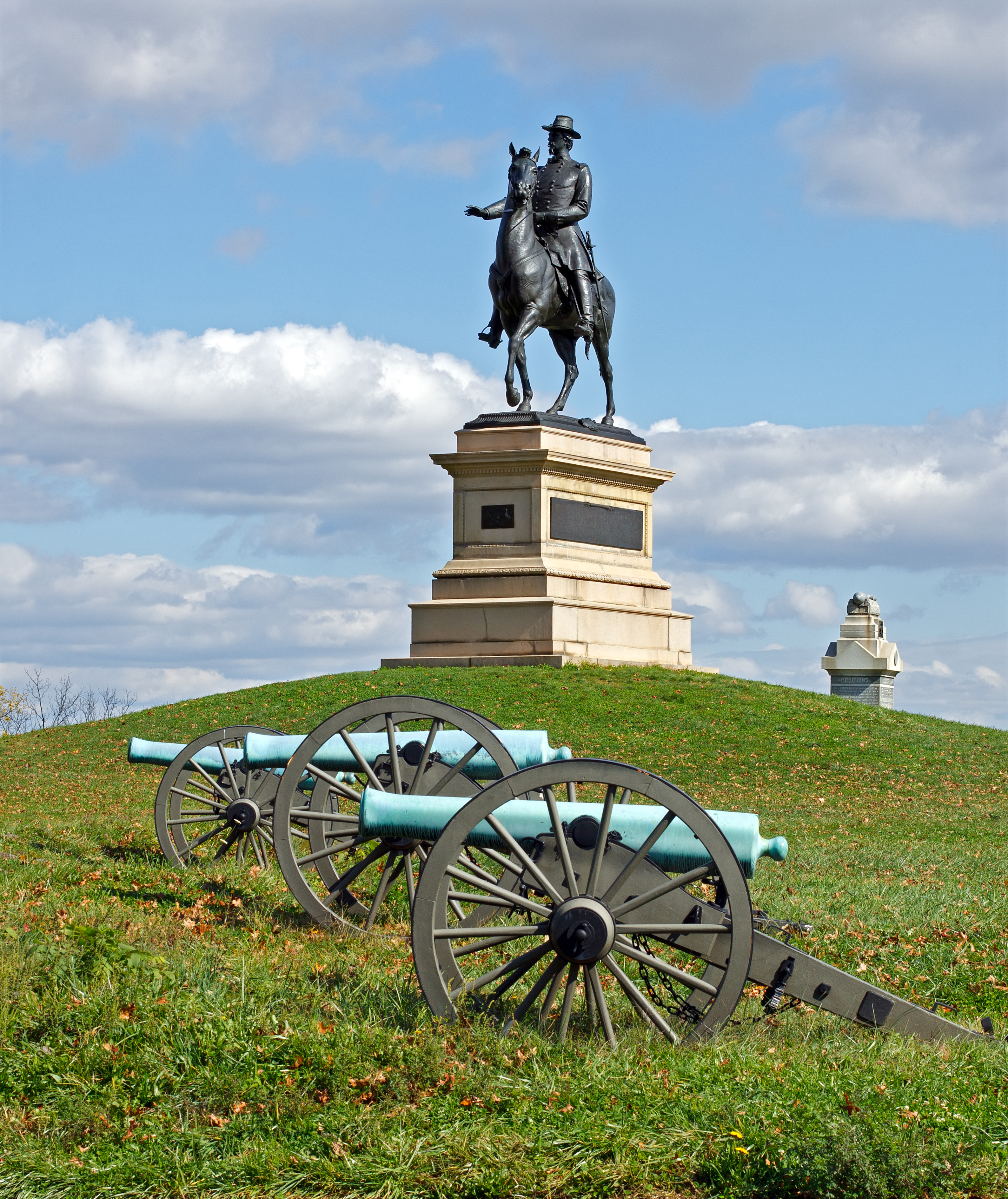
Historians and Hollywood producers alike have held up the story of Union Major General Winfield Scott Hancock and Confederate Brigadier General Lewis Armistead to illustrate the tragedy of internecine warfare. Hancock and Armistead had developed a friendship when stationed together in California before the war, with Armistead famously sending Mrs. Hancock the Armistead family bible for safekeeping as he left to join the Confederate As dramatically depicted in on the big screen in 1993’s Gettysburg, Armistead, a Brigade Commander in Pickett’s Division, found himself facing the center of the Union line, under the command of his friend Hancock, on July 3, 1863. Armistead, by all accounts, gallantly led his Brigade in what we now know as Pickett’s Charge, falling mortally wounded as he crossed the stone wall near “the angle,” generally considered to be the “high water mark” of the Confederacy. Knowing that he was in the hands of his friend’s troops, Armistead asked in vain to be taken to General Hancock, who had been wounded himself in the day’s fighting. The two never reconnected, despite their close proximity on the battlefield, and Armistead subsequently succumbed to his wounds.
The Irish Civil War produced no shortage of such sadly severed friendships, as the IRA in 1922, like the United States Army in 1861, found itself separating into two opposing forces. The treaty had been approved in the Dáil Éireann by a vote of 64 to 57, in favor, but the sentiment in the ranks was decidedly anti-treaty. For some pro-treaty IRA members, it was their unshakeable belief in Michael Collins that informed their decision to support the treaty. If the “Big Fellow” said that the treaty was a “stepping stone” to the thirty-two-county Republic of 1916, then that was good enough. Other pro-treaty volunteers saw themselves, in the conventional sense, as soldiers serving the elected government of their country – if the Dáil had approved the treaty, they reasoned, by however slim a margin, they were bound to support their government’s position. Anti-treaty IRA members, to the contrary, saw the treaty as a betrayal of the thirty-two county Republic of 1916.
The transformation of the Volunteers/IRA into the “National Army” had been a point of contention in late 1921, even before the Dáil voted to ratify the Treaty on January 7, 1922. As a revolutionary force, the IRA had emerged from the Irish Volunteers, through the infiltration of the Irish Republican Brotherhood. The question of chain of command had been at times been a bit murky, as the Volunteers/IRA had an elected executive of their own, separate and apart from the Dáil. The so-called “New Army Plan” of 1921 sought to conform the IRA to a more conventional structure, with a Ministry of Defense, General Headquarters and the like. The Volunteer/IRA Executive The process of molding the IRA into a conventional military structure was underway, and not universally popular, when the Treaty was ratified.
Efforts were made, in the aftermath treaty ratification to keep the IRA together. An IRA convention, first agreed to but then banned by the Provisional (Free State) Government, was held on March 26, 1922. With pro-Treaty attendance having been discouraged, the already likely result became inevitable, as the delegates voted to reestablish the IRA Executive and reaffirmed allegiance to the thirty-two County Republic of 1916. Units around the country had to decide which side they were on, and there are many accounts of groups of Volunteers taking their leave of their comrades after finding themselves on the “wrong” side of the split. Pro-treaty IRA units, which became the nucleus of the new “National Army,” tragically found themselves engaged against anti-Treaty units, in spite of rank-and-file members on both sides sharing a common goal, differing only in their belief as to the best way of achieving that goal.
July of 1922, the first full month of the war, saw open conflict between pro and anti-Treaty units across the country, as each side sought to establish local strongholds. The month ended with the shooting by National Army troops of the unarmed Harry Boland, a widely popular figure in the Republican movement who had been at “out” at the GPO in 1916 and had subsequently risen to prominence in the War of Independence. Boland, who had been serving as the Quartermaster of the Dublin anti-Treaty IRA, would die on August 1, 1922, prompting Michael Collins to reflect with regret upon the death of his longtime friend and comrade turned adversary.
Collins, writing to his fiancé Kitty Kiernan, noted that he had walked past St. Vincent’s Hospital, where a crowd had gathered, knowing that Boland was lying dead inside, and could not help but to reflect upon past times with his friend. Boland’s last words are alleged to have been “I forgive all of them.” The events surrounding Boland’s death and his relationship with Collins were portrayed, albeit with considerable factual license, in the 1996 film Michael Collins, making Collins and Boland, in a popular culture sense, the Hancock and Armistead of the Irish Civil War.
General Hancock survived his Gettysburg wounds and went on to be the Democratic nominee for President in 1880 before dying in 1886. Michael Collins was not so lucky – less than a month after the death of his friend Harry Boland, Collins himself was dead, caught in anti-Treaty ambush in his native County Cork on August 22, 1922. Collins body, like that of his friend Harry Boland just three weeks prior, would lie at St. Vincent’s Hospital before being taken to lie in state at City Hall.
There are no photographs of the funeral of Harry Boland, but the painter Jack B. Yeats, brother of William Butler Yeats, painted the scene. The painting is owned by the Niland Collection and can be seen at “The Model” a facility in County Sligo. The painting depicts the O’Connell monument in the background, and anti- Treaty IRA honor guard, and members of Cuman na mBan, carrying wreaths.
View the Painting and Learn more at: https://www.themodel.ie/?artwork=the-funeral-of-harry-boland-by-jack-b-yeats-1871-1957
The morning’s carnage might well have proven counterproductive for the IRA, in terms of public opinion, at home and abroad, had British forces not responded by massacring civilians in the afternoon. Dublin and Tipperary were meeting in a football match at Croke Park to benefit the Republican Prisoners’ Dependents’ Fund. Shortly after the match began at 3:15 p.m., a plane, apparently conducting reconnaissance, flew over the pitch. Moments later, truckloads of Black and Tans, Auxiliaries and regular British troops surrounded the Park and burst through the turnstiles, opening fire on the crowd. Although nominally intended as a cordon and search mission – looking for IRA men in connection with the morning’s shootings – the massacre at Croke Park was in fact a shockingly lawless reprisal – the murder of innocence civilians by forces of the British state.
While efforts were made to suggest that the Tans and Auxiliaries had merely responded to IRA gunfire, the truth was plain to see. The afternoon massacre at Croke Park was a reprisal by Crown forces in Ireland, reeling from the IRA’s brutally successfully morning operation, against the citizens of Dublin. The profiles and ages of the victims, who are being remembered this week in GAA circles and across Ireland, show them to have been ordinary citizens. The youngest, ten year-old Jerome O’Leary, was shot through the head as he sat on a wall, watching the match. Eleven year-old William Robinson was similarly shot as he sat perched in a tree to see the action.
British Prime Minister Lloyd George had proclaimed, just two weeks prior, that the British had “murder by the throat” in Ireland. As the sun set on Ireland on Sunday November 21, it was far from clear just who the murderers where. By misusing its “monopoly on the physical use of force” the British government in Ireland had scored an “own goal,” suffering a corresponding loss to its claim of legitimacy, in the eyes of the Irish people and the world. Just as the hasty executions following the Easter Rising had galvanized Irish Nationalists, the shocking mass murder by Government forces of citizens out to watch a football match swelled the inexorable tide of independence rising in Ireland and influenced policy makers on both sides of the Irish Sea. Diplomatic contacts between Sinn Fein and the British government accelerated, ultimately leading to the Anglo-Irish Treaty of 1921.
Croke Park, already the center of traditional Irish sport, became a shrine to the innocent dead and a monument to Irish nationhood. And all of this happened one hundred years ago this week.
]]>
The country is again in the midst of a movement aimed at retiring team names and mascots deemed to be offensive. As with prior such movements, the “Fighting Irish” moniker and leprechaun mascot, with his classic “fisticuffs stance”, have entered the discussion. Those objecting to the nickname are presumably well-intentioned. But is “Fighting Irish” a slur? Or does the term have an origin of which the University, its students, alumni and the countless “subway alumni” can rightfully be proud?
Long before Notre Dame was established, the Irish soldier had a reputation for military prowess among the nations of Europe . The Treaty of Limerick in 1691 provided for the “Flight of the Wild Geese” in 1691 as Patrick Sarsfield and his Irish army of 14,000 joined Mountcashel’s Irish Brigade in the service of France . The Crowned heads of Europe (excluding England) enjoyed the service of generations of military leaders and intrepid Irish units who proved their worth time and time again. These Irish units in European service soon earned a reputation for their dependability and valor, leading continental armies to recruit in Ireland until the British made the practice illegal in 1745.
Irish emigration in the aftermath of the Great Hunger brought large numbers to our shores, just as the simmering conflict between the north and south was preparing to boil over. Anti-Catholic Nativists saw the Irish masses disembarking at American ports as a threat. Catholics, especially Irish Catholics, were considered to be dirty, immoral and “Un-American,” more loyal to Rome than Washington.
The Irish enlisted in the Union Army in great numbers and readers of this column are well aware of the gallant exploits of Irish Brigade. The penchant of the Brigade’s commanders for headlong charges and the willingness of the Irish troops soon caught the attention of other combatants, newspapers and the American people. The steady advance of the Brigade against murderous fire at Marye’s Heights on December 11, 1862 amazed the most battle-hardened observers. George Pickett famously wrote to his fiancé: “Your soldier’s heart almost stood still as he watched those sons of Erin fearlessly rush to their deaths. The brilliant assault on Marye’s Heights of their Irish Brigade was beyond description. We forgot they were fighting us and cheer after cheer at their fearlessness went up all along our lines.”
What does any of this have to do with Notre Dame? The exploits of Irish troops reported in the papers could not have been more different than Nativist depictions of the Irish. “Fighting Irish” referred not to drunken brawlers, but loyal American soldiers, the bravest of the brave. Notably, one of the Chaplains of the Brigade was Father William Corby, who later became the President of Notre Dame.
Of the competing genesis stories of the “Fighting Irish” name, the connection between the Brigade, Father Corby and Notre Dame perhaps rings most true. Unlike Indian names adopted by non-Native Americans, the name “Fighting Irish” was adopted by Notre Dame President, Mathew J. Walsh, C.S.C., son of an immigrant from County Cork, in 1927. As for the pugilistic leprechaun, the Irish had dominated the sport of boxing for decades. The stance of the leprechaun (search “John L. Sullivan” and look at the image) says it all – he is pure boxer, not barroom brawler. Certainly no one thinks that the “Fighting Illini” name of the occasional Notre Dame opponent is a slur. Come what may, it seems likely that the Fighting Irish of Notre Dame will continue to “ fight in every game, Strong of heart and true to her name.”
]]>